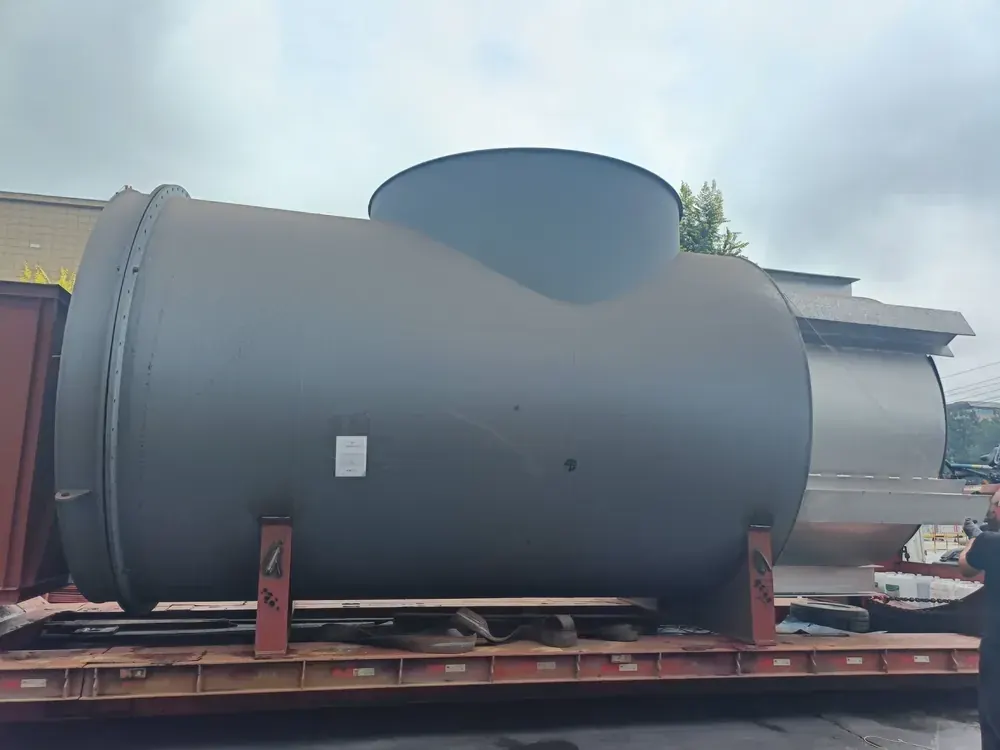
Flat Rack Container
Best for small and medium stacksCourses up to 3.2 m diameter ship on flat racks, often nested to use the space. Cheapest option for stacks under about 45 m and diameters under 3 m.
Ø ≤ 3.2 mNestedLowest cost
A 120 m chimney travels as 20–40 segments. How we split it depends on road limits at your site, crane capacity and shipping method — decided before fabrication starts.
A tall chimney does not travel as a chimney. It travels as a set of numbered courses, each sized to fit a truck, a crane and a ship. How we cut it up is decided with you before the first plate is cut — because changing segmentation later is expensive.
Four constraints decide how a shell is cut into transportable pieces. We ask for all four before quoting, not after the contract.
| Constraint | Typical limit | Effect on segmentation |
|---|---|---|
| Road transport at site | 12 m length, 3.0–3.5 m width, 4.0 m height | Sets the maximum course length and diameter shipped as a full ring |
| Site crane capacity | Often 50–150 t | Sets the maximum single piece weight |
| Port handling | Container, flat rack or break bulk | Decides whether rings ship whole or split into halves |
| Workshop rolling capacity | 3 m course length, Ø 8 m | Sets the largest shop-made ring before it is split for shipping |
Send the site plan, the crane you can hire and the road width at the gate. Those three answers usually save a shipment full of rework.
Courses up to 3.2 m diameter ship on flat racks, often nested to use the space. Cheapest option for stacks under about 45 m and diameters under 3 m.
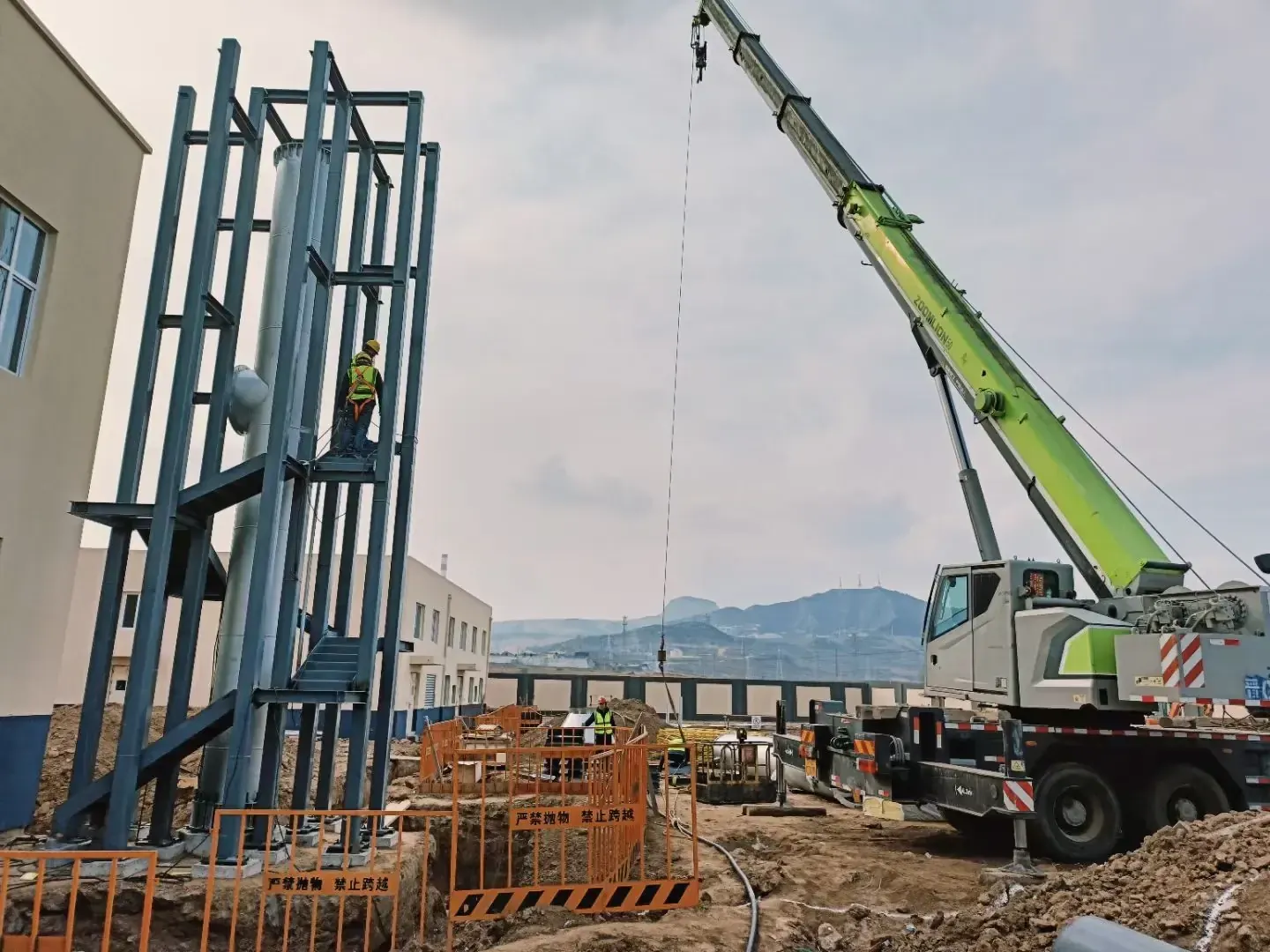
Full rings loaded directly onto the deck or into the hold. The normal method for diameters above 3.5 m and for very heavy courses.
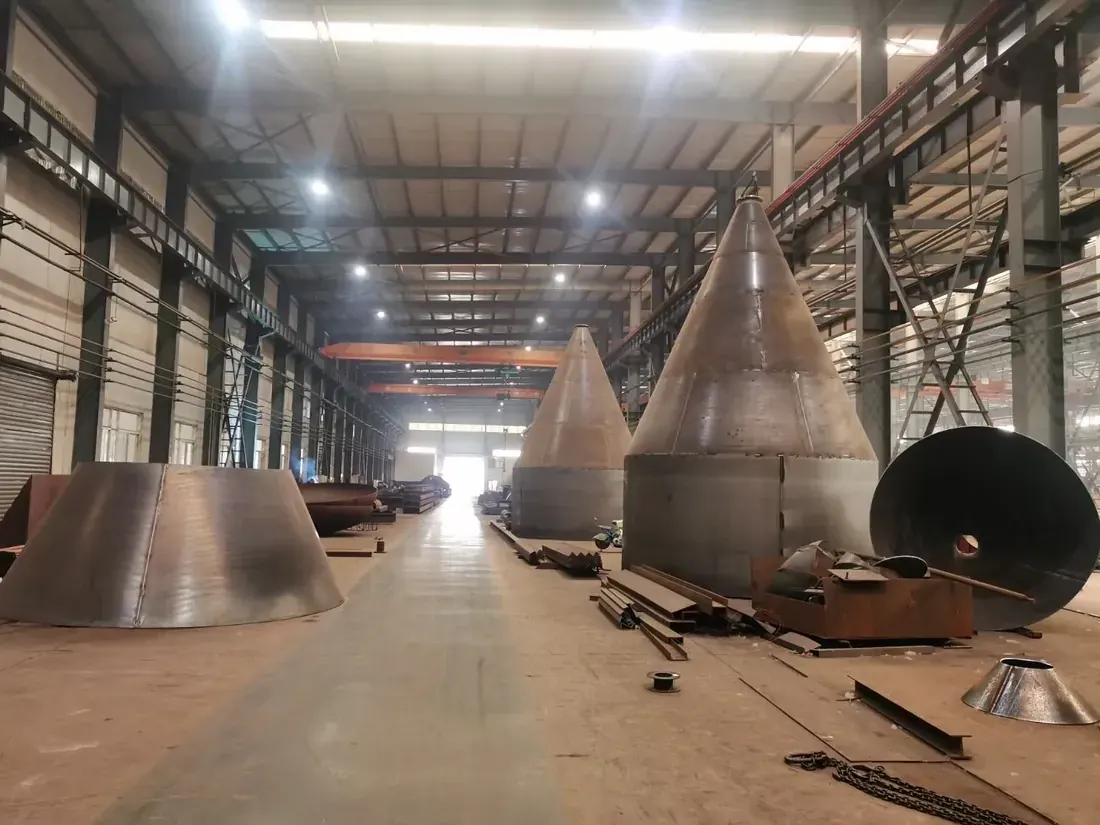
Platforms, ladders, brackets and bolts ship in open-top containers. We never ship coated shell courses this way — the coating would be damaged in handling.
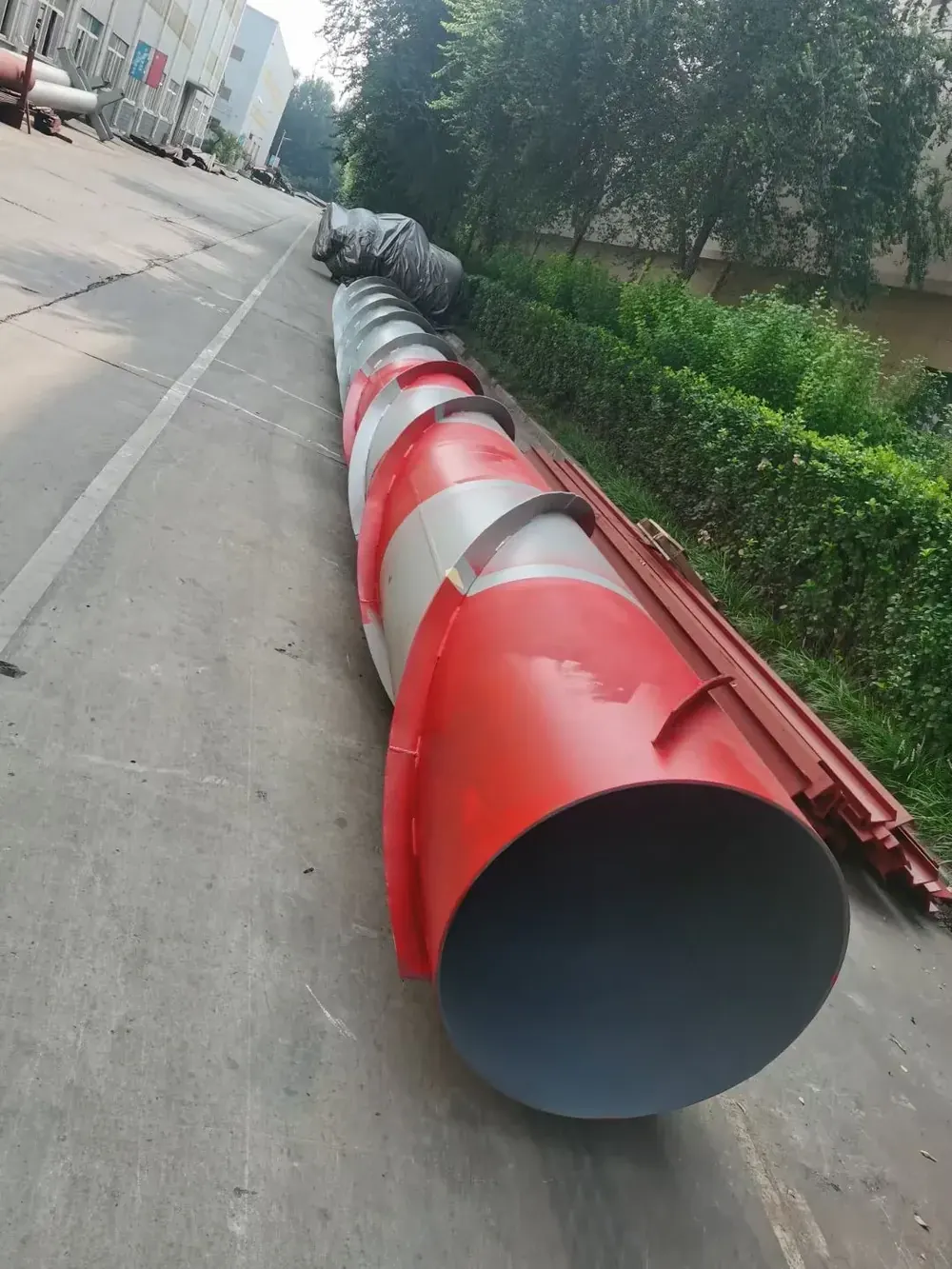
| Item | Detail |
|---|---|
| Incoterms | FOB Qingdao (standard), CIF / CFR on request |
| Lead time | 55–90 days up to 65 m; 90–120 days for 90 m and above, from drawing approval |
| Shipping documents | Invoice, packing list, B/L, certificate of origin; mill certificates and inspection reports on request |
| Heavy lift | We provide weights, dimensions, centre of gravity and lifting points per piece for your forwarder |
| Site support | Erection drawing and lifting sequence always included; supervising engineer on request |
Our engineers review every enquiry personally. Attach a drawing or just describe the plant — we will come back with a technical proposal and a priced offer.