Materials & Corrosion Protection Selected from Your Flue Gas, Not a Paint Catalogue
The lining decides whether a chimney lasts 10 years or 30. We select the system from flue gas temperature, acid dew point, chloride level and dust load — then state the limits and the cases where a system should not be used.
A steel chimney is only as good as the surface that faces the gas. This guide sets out how we select a lining from four inputs — operating temperature, acid dew point, chloride content and dust load — and where each system must not be used. Send us these four numbers and you get a liner recommendation, not a paint catalogue.
| Flue gas condition | Temp. | Main threat | Lining we specify | Service life |
|---|---|---|---|---|
| Coal-fired, wet FGD | 40–60 °C | Dilute sulphuric acid condensation | Glass flake lining / acid-resistant brick / 316L–2205 liner | 15–25 yr |
| Coal-fired, dry (no FGD) | 120–160 °C | Acid dew point at start-up | Heat-resistant coating + 316L in the dew-point zone | 20–25 yr |
| Gas / oil, dry | 150–600 °C | Oxidation, thermal cycling | Silicone or silicone-aluminium coating | 15–20 yr |
| Biomass / WtE | 140–220 °C | Chlorides + dust abrasion | 2205 duplex or nickel-alloy clad plate | 20–25 yr |
| High-sulphur heavy oil | 150–400 °C | Hot corrosion, vanadium | Nickel-alloy cladding in the hot section | 15–20 yr |
Service life assumes the lining is applied under shop conditions to a correctly blasted surface (Sa 2.5) and inspected before shipment. Site-applied lining is always the weaker option.
Coal-fired Boiler with Wet FGD
The most common and the most punishing condition: saturated gas at 40–60 °C carrying residual SO2, SO3 and chlorides. Condensate runs down the wall as dilute sulphuric and hydrochloric acid.
What the wall actually sees
- Temperature — 40–60 °C gas, but the shell can be colder, so condensation is continuous
- Acidity — pH 1–3 in the condensate film
- Chlorides — 200–20 000 mg/m³ depending on coal and make-up water
- Dust — low after the FGD, so abrasion is not the driver; corrosion is
- Worst zone — the first 10–15 m above the gas inlet, where the film is thickest
Three valid answers
- Glass flake lining, 2–3 mm — cheapest; needs a perfect application and a 5–8 year re-inspection cycle
- Acid-resistant brick over a membrane — heaviest and most expensive; effectively permanent, used on large utility units
- Stainless liner (316L / 2205) — a separate inner cylinder; best where chloride is high and outage time is expensive
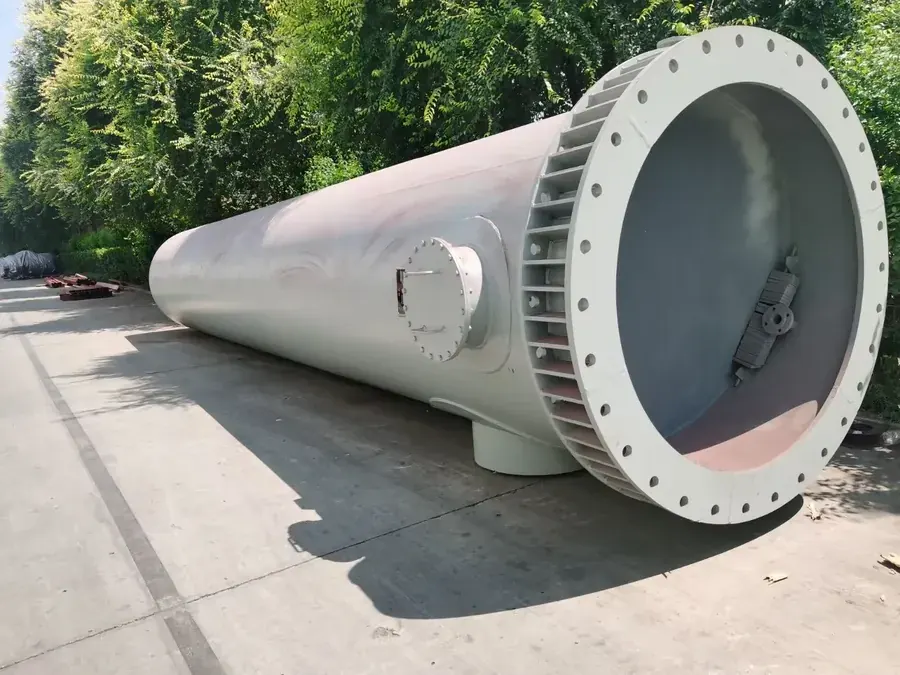
Where carbon steel alone fails
Unlined carbon steel in wet FGD service typically perforates in 3–7 years at the acid dew-point zone. If a quotation for a wet-FGD chimney does not specify a lining system and its thickness, that quotation is incomplete.
Gas-fired and High-temperature Dry Gas
No acid condensation in normal operation, but the steel runs hot and cycles every day. The failure mode here is oxidation and coating breakdown, not acid.
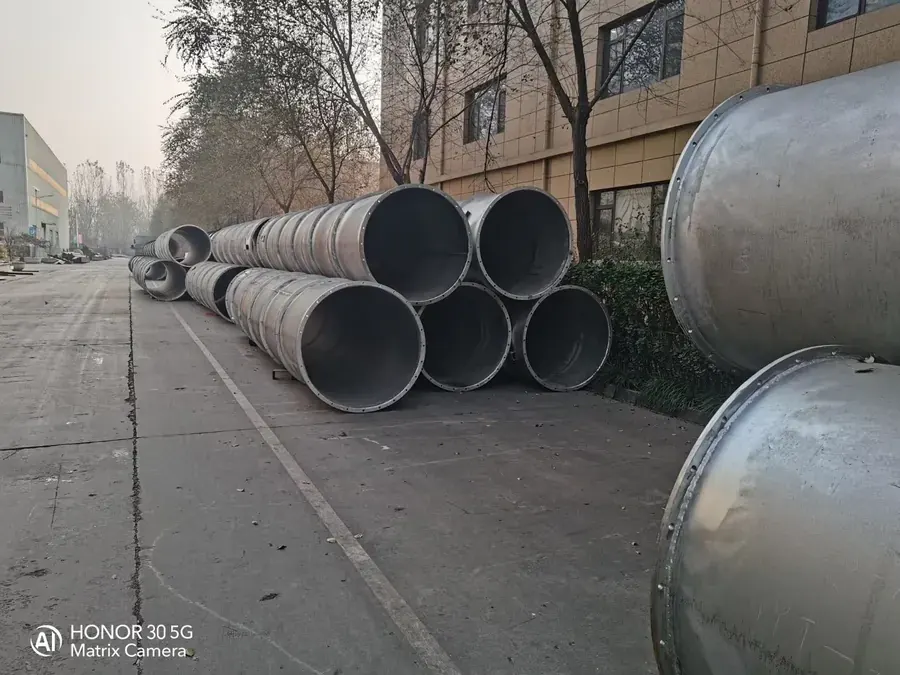
Temperature bands and what to use
- Up to 300 °C — high-build epoxy or silicone-modified systems; adequate for most gas engines
- 300–500 °C — pure silicone coating, 2 × 50 microns; standard for gas turbine HRSG stacks
- 500–600 °C — silicone-aluminium; the practical ceiling for paint
- Above 600 °C — no coating: use heat-resistant steel, or add internal insulation
The start-up problem
Gas-fired plants start cold. Below the acid dew point, even a dry gas condenses acid for the first hour. We specify a 316L band in the dew-point zone, or accept a shorter inspection interval — and we say which in the offer.
Do not paint above 600 °C
Beyond roughly 600 °C every organic coating decomposes. Suppliers who offer high-temperature paint rated at 800 °C are selling you a first-year failure. Above that limit the answer is heat-resistant steel or internal insulation — a structural change, not a coating change.
Biomass, Waste-to-Energy and High-chlorine Gas
The hardest case: chlorides attack stainless steel directly, and the dust in biomass and waste gas abrades whatever you put on the wall.
Why 316L is not enough
- Chloride pitting — above roughly 500 mg/m³ Cl- at 60 °C, 316L pits in months
- Abrasion — dust strips coatings at the inlet cone and in bends
- Thermal cycling — biomass boilers ramp daily; differential expansion cracks brittle linings
- Wet/dry cycling — the dew-point zone moves up and down the stack, so one material rarely covers it
What we do instead
- Hot section — 2205 duplex plate, or alloy 625 clad plate where chloride is very high
- Cold section — glass flake or 316L, protected by the temperature drop above
- Inlet cone and first bend — extra thickness as a wear allowance, plus a replaceable wear plate
- Joints — welded, not bolted; bolted joints in chloride service are where it starts
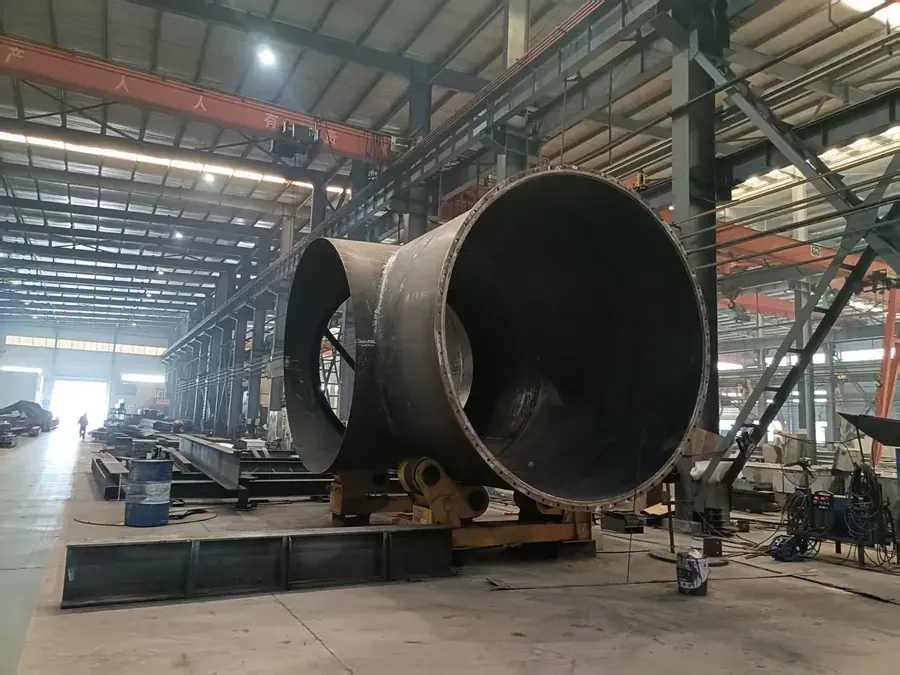
Ask for the chloride number
If a supplier offers you 316L for a waste-to-energy flue without asking for the chloride content, they are guessing. We ask for Cl- in mg/m³, the flue gas temperature at the inlet, and the dust load — and we put the answer in writing in the technical offer.
Liner Material Comparison
The numbers below are the working limits we design to. They are deliberately conservative: the published limits in a mill certificate assume clean, constant conditions that a chimney never has.
| Material | Max Cl- at 60 °C | Max temp. | Relative cost | Use for |
|---|---|---|---|---|
| Carbon steel + glass flake | n/a (barrier) | 120 °C | 1.0 | Wet FGD cold section, dry gas |
| 316L | ~200 mg/m³ | 400 °C | 2.5–3.5 | Clean wet gas, dew-point band |
| 2205 duplex | ~1 000 mg/m³ | 300 °C | 4–5 | Biomass, moderate chloride |
| 254SMO / super-austenitic | ~3 000 mg/m³ | 300 °C | 8–10 | High chloride, wet |
| Alloy 625 cladding | > 10 000 mg/m³ | 600 °C | 15–20 | WtE hot section, heavy oil |
| Acid-resistant brick | n/a (barrier) | 150 °C | 3–4 | Large utility wet stacks |
External protection
Outside the stack the environment is your plant, not your flue gas. We specify the ISO 12944 category from the site: C3 inland, C4 coastal industry, C5-M marine or heavy chemical exposure.
- Surface prep — Sa 2.5, with soluble salt testing before the first coat
- C3 — 160 micron total: epoxy primer + polyurethane topcoat
- C4 — 240 micron total: zinc-rich primer + epoxy intermediate + polyurethane topcoat
- C5-M — 320 micron total: zinc-rich + epoxy + polysiloxane or fluoropolymer topcoat
- Colour — RAL as specified; aviation warning bands above the height set by local rules
Steel grades
- Q235B — general shell plate, temperate sites
- Q355B — main structural plate where strength governs
- Q355D — cold climates, impact tested to −20 °C
- Q355NH / Q345qD — where weathering or bridge-grade toughness is specified
Insulation
Where the gas is hot and the shell must stay cool, we add rock wool or ceramic fibre between liner and shell. That keeps the shell above the acid dew point and the lining below its temperature limit — a small cost that adds years.
Questions We Get Every Week
Can you apply the lining at site instead of in the workshop?
Yes, but it is the worst option. Site humidity, dust, temperature and access make a perfect bond much harder, and nearly every lining failure we have investigated was site-applied. We recommend workshop lining with protected transport. If site lining is unavoidable, we send a supervisor.
What is the minimum information you need to recommend a lining?
Four numbers: flue gas temperature at the inlet, chloride content in mg/m³, sulphur content of the fuel, and dust load. Plus annual operating hours and whether the plant runs wet FGD. With those we can commit to a system in writing.
How long does the external paint last?
For a C4 system at 240 microns we expect 12–15 years before first maintenance; C5-M at 320 microns will go longer. What kills coatings is not the climate but poor surface preparation — which is why we test for soluble salts, not just blast to Sa 2.5.
Do you supply the lining, or only the steel?
Both. We fabricate the shell and either apply the lining in-house (glass flake, coatings) or buy and weld the stainless or duplex liner as part of the same package. One supplier, one warranty line.
Is 316L acceptable for a biomass boiler flue?
Only in the cold, low-chloride section — and only if you can show Cl- below about 200 mg/m³ at that temperature. For the hot section of a biomass or waste flue, 2205 is our minimum, and nickel-alloy cladding where chloride exceeds 1 000 mg/m³.
Continue reading
Send Your Chimney Spec —
Response Within 24 Hours
Our engineers review every enquiry personally. Attach a drawing or just describe the plant — we will come back with a technical proposal and a priced offer.
- Drawings or applicable standard
- Quantity / number of stacks
- Destination port
- Flue gas condition
- Required delivery date
- Payment terms