Chimney Manufacturing Process Cutting to Trial Assembly, Under One Roof
Every stage happens in our own workshop — no subcontracted rolling and no third-party welding. That is how tolerances hold on a 120 m stack and delivery dates stay real.
A 120 m chimney is made of roughly 40 shell courses and a few hundred attachments. What decides whether it stands true is what happens between the plate yard and the trial assembly — and whether one company controls all of it. Here is our sequence, with the acceptance point at each stage.
Engineering, Material, Cutting, Rolling
Detail Design
Structural calculation to GB/T 50051-2021 / GB 50135-2019, then shop drawings with every course, stiffener and platform located.
Material Receipt
Mill certificates checked against the drawing; plate identified and traceable to each course.
CNC Cutting
Plasma or CNC flame cutting with bevelled edges for full-penetration welds. Course numbering marked at this point.
Shell Rolling
Three-roll bending to the calculated diameter, with template checks at both ends of every course.
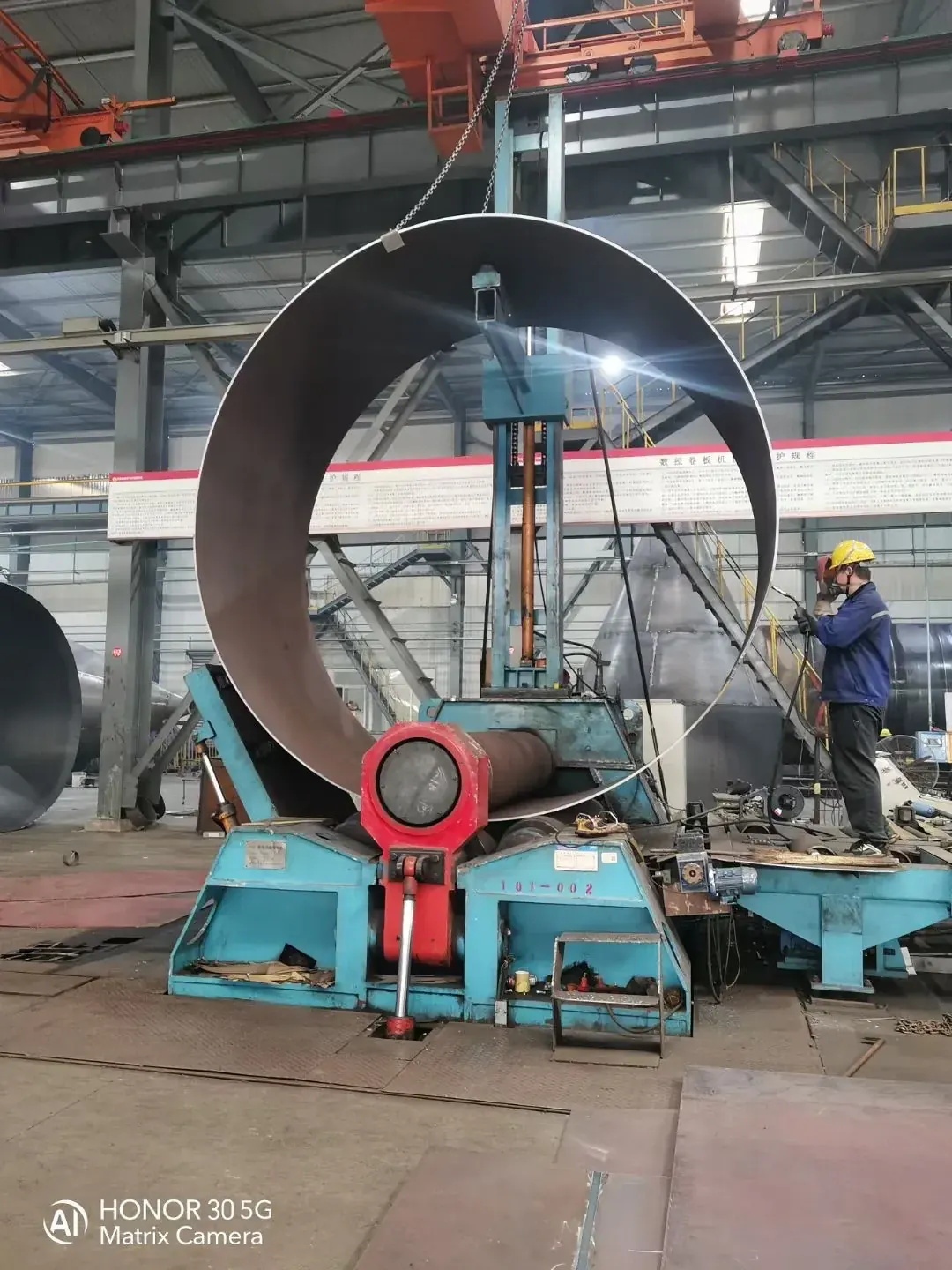
Why rolling is the first quality gate
A course that is out of round cannot be fixed later: the longitudinal seam goes in with built-in stress, and the circular seams stack the error up the stack. We check circularity with a steel template at both ends of every course, and we do not roll a course until the plate has been stress-relieved if the grade requires it.
- Roundness — template gap ≤ 2 mm on a chord of 1/6 diameter
- Longitudinal seam — bevelled both sides, single-side SAW with backing
- Peaking — measured and corrected before the course leaves the bay
- Traceability — course number stencilled at cutting, kept through coating
Fit-up, Welding, NDT
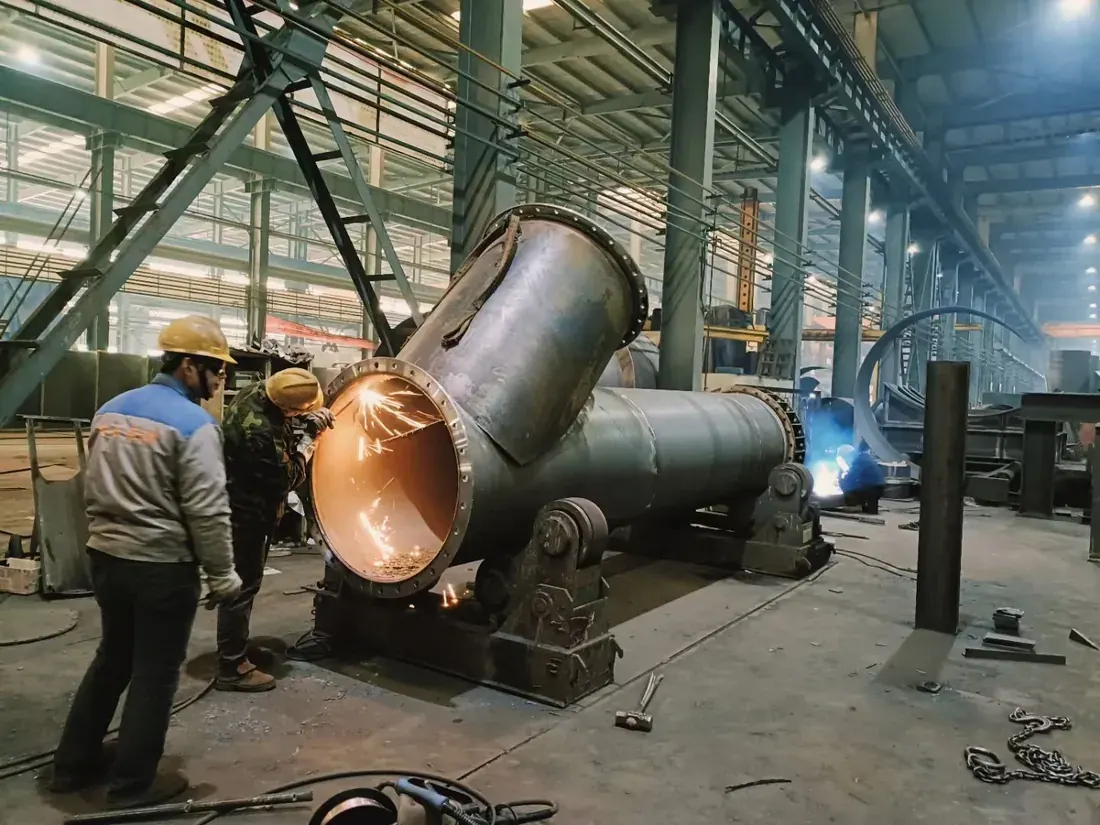
Welding is where a chimney is won or lost. We hold WPS/PQR for every joint type used, and the welders are qualified to AWS D1.1 for the position they actually work in.
Welding sequence
- Longitudinal seams — submerged arc welding (SAW), one side with ceramic backing or two-side welding
- Circular seams — SAW on a rotator for shop joints, FCAW/GMAW for field or restricted joints
- Attachments — stiffeners, platform brackets and ladder clips welded after the main seams, with distortion control
- Preheat — applied for plate over 25 mm or low-temperature grades, per the WPS
- Repair — excavations ground out, re-welded to the same WPS, re-tested
Inspection at this stage
- Visual — 100% of all welds, before and after any NDT
- UT — full penetration seams: longitudinal and circular, sample or 100% per contract
- RT — where specified, typically on T-joints and cross seams
- MT / PT — fillet welds, attachment welds and repair areas
- Third party — SGS, BV or TÜV witness at this stage if the contract requires it
Blasting, Lining, Coating
Surface preparation is 80 % of coating life. We blast to Sa 2.5, test for soluble salts, and apply the primer within the specified hold time — not the next morning.
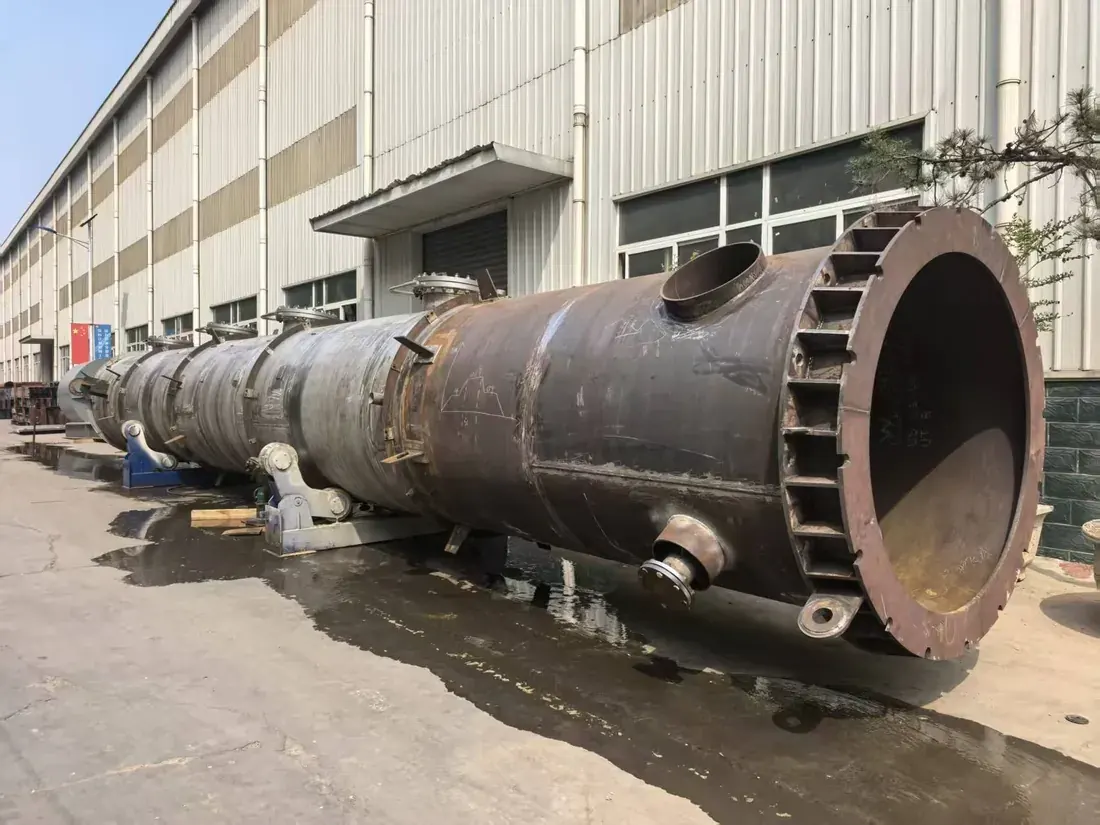
Order matters
Internal lining and external coating are not the same job and cannot be done in the same bay. The sequence we use:
- 1. Blast internal — Sa 2.5, profile 50–80 micron, salt test
- 2. Internal lining — glass flake, coating or stainless liner welding, with spark testing on barrier linings
- 3. Blast external — Sa 2.5, then primer within the hold time
- 4. External system — intermediate and topcoat to the specified ISO 12944 total DFT
- 5. DFT verification — magnetic gauge, one reading set per 10 m², recorded
What we record
Blast grade, salt reading, product batch numbers, wet and dry film thickness, ambient temperature and humidity for every coat. That record travels with the shipping documents — so when the inspector asks in year 15, the answer exists.
Trial Assembly, Packing, Documents
Trial assembly
Every chimney is trial-assembled in the workshop — at minimum the lowest two courses, and for complex jobs the full bottom section with platforms. Bolted and welded match marks are transferred to the pieces before dismantling.
- Circularity — total out-of-round measured over the assembled height
- Verticality — plumb check on the trial stack
- Platform fit — brackets, gratings and ladders fitted once, then marked
- Flange match — duct connections matched before coating
Packing and documents
- Packing — courses nested where diameters allow, timber saddles, steel strapping, rust-preventive on machined faces
- Marking — piece mark, weight, centre of gravity and lifting points painted on each piece
- Documents — packing list, mill certificates, WPS/PQR, NDT reports, coating records, ITP signed off, erection drawings
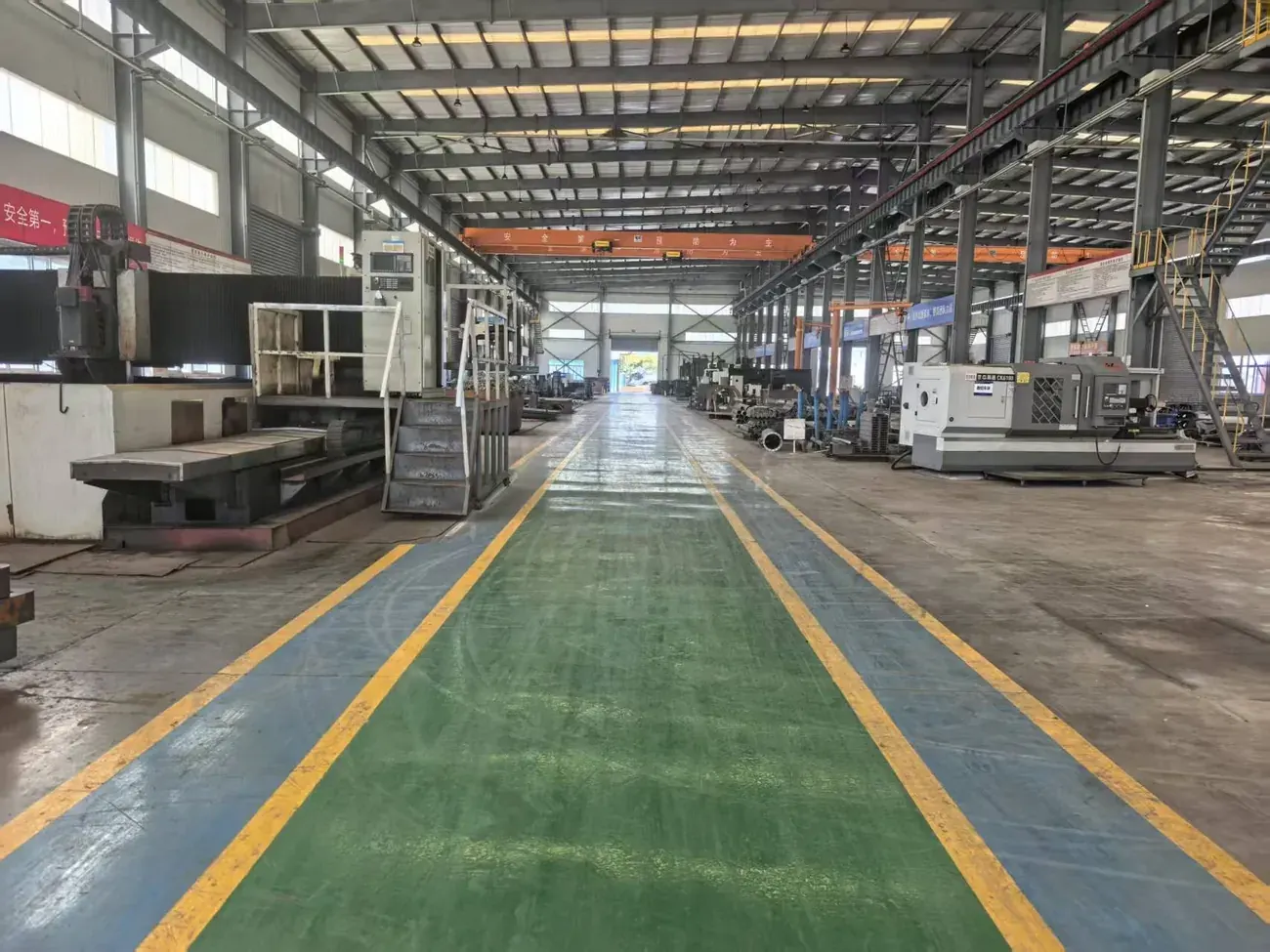
What Can Be Checked, and When
| Stage | Control point | Acceptance | Who signs |
|---|---|---|---|
| Material | Mill certificate vs. drawing | Grade, thickness, impact test | QC + third party |
| Rolling | Circularity template | ≤ 2 mm gap | QC |
| Fit-up | Root gap, alignment, peaking | Per WPS and drawing | QC |
| Welding | WPS compliance, welder ID | Qualified welder per joint | QC |
| NDT | UT / RT / MT / PT | Acceptance level per contract | NDT lab + third party |
| Coating | Blast grade, salt, DFT | Sa 2.5, DFT per system | QC + third party |
| Trial assembly | Roundness, plumb, fit | Per drawing tolerance | QC + client |
Copies of the signed ITP, NDT reports and coating records are issued with the shipping documents on every order. If your client's inspector needs to witness a stage, tell us at order — we schedule the hold points around their visit.
Continue reading
Send Your Chimney Spec —
Response Within 24 Hours
Our engineers review every enquiry personally. Attach a drawing or just describe the plant — we will come back with a technical proposal and a priced offer.
- Drawings or applicable standard
- Quantity / number of stacks
- Destination port
- Flue gas condition
- Required delivery date
- Payment terms